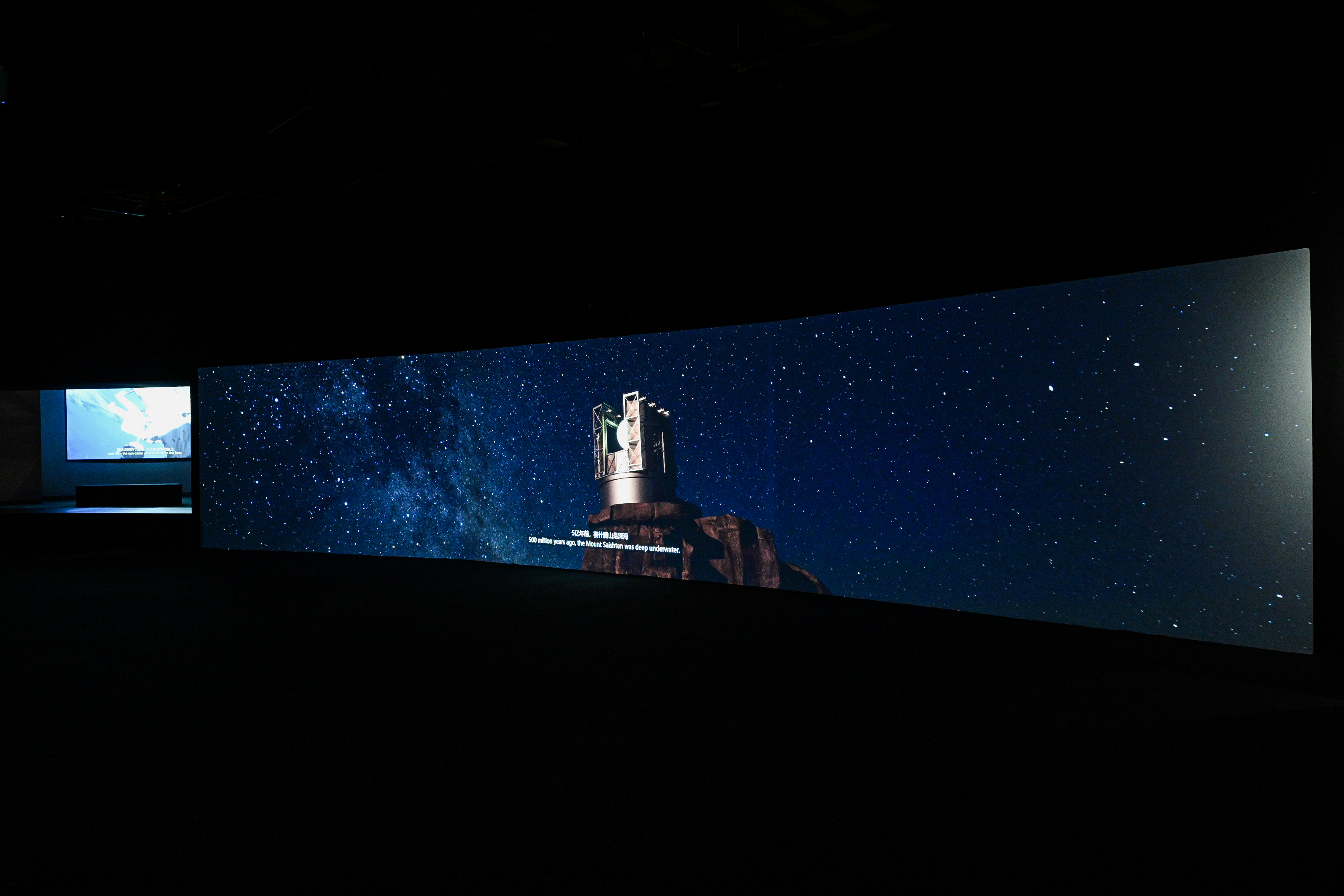
Touch the Universe | Art, Astronomy and Astrophysics residency
01/Apr/24 at 9:15 AM to 08/Oct/24 at 9:15 AM
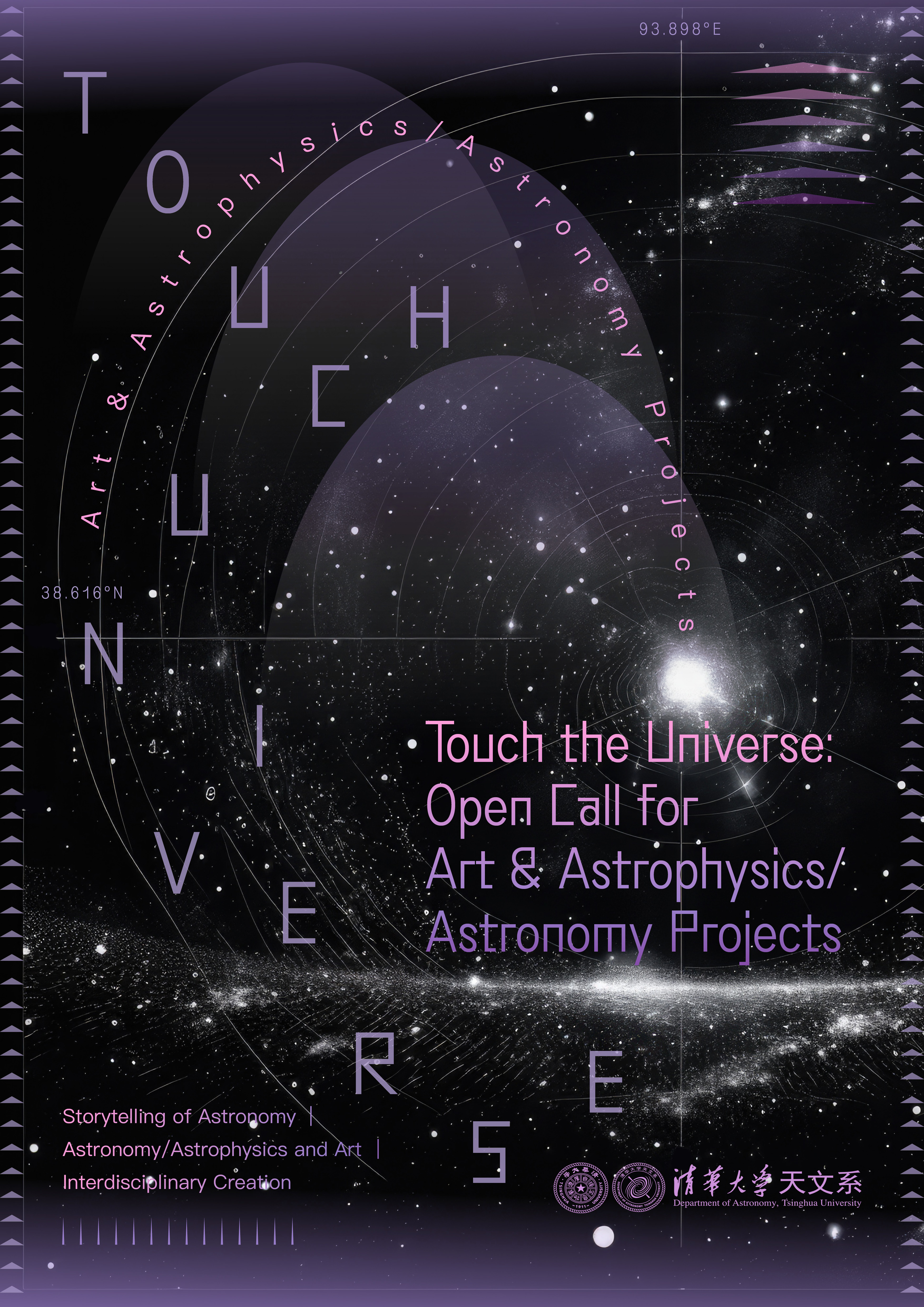
"Touch the Universe" is an interdisciplinary residency project in China that focuses on astrophysics/astronomy and art. It is hosted by the Department of Astronomy at Tsinghua University. The mission of "Touch the Universe" is to bridge the disciplines of astrophysics and humanities/art, seeking common ground for creative, speculative, and philosophical aspects, promoting interdisciplinary dialogue, and opening up to practitioners from fields such as art, design, and science fiction.
The residency project will develop around scientific and engineering projects led by the Department of Astronomy at Tsinghua University. It will explore how current astronomy/astrophysics research at different scales can create encounters with the universe and raise a series of fundamental questions related to astronomy, astrophysics, philosophy of science, and contemporary life. As an interdisciplinary research project, "Touch the Universe" not only focuses on conveying cutting-edge astronomical knowledge but also delves into the everyday work behind abstract models and data in astronomy, In addition, the project explores how astronomy, as a middle ground, relates to precision instruments, space exploration, and everyday technologies. It also seeks to collaboratively explore what our shared concerns and care are when we discuss the universe.
"Touch the Universe" is centred around the residency work carried out at the Department of Astronomy at Tsinghua University. It invites researchers in the fields of history of science, philosophy of technology, and science and technology studies (STS) to participate in the residency phase as visiting scholars or advisors. The first residency phase is planned to commence in December 2023, and the outcomes of the residency will be exhibited next year curated by technology art curator Iris Long.
Research Directions
Departing from Astronomy
As a fundamental natural science, astronomy has served as both a testing ground for new technologies and a driver of widespread technological advancements throughout its history. The photograph of the Moon taken by Louis Jacques Daguerre in 1839 is considered one of the earliest examples of astronomical photography. The Hubble Space Telescope, in the 1970s, played a role in the civilian use and popularisation of CCD imaging technology initially developed for space missions. The technology originally used for data transmission in the Dwingeloo Radio Telescope became a core component of wireless local area networks, with Wi-Fi being its most significant everyday application. The launch of the Sloan Digital Sky Survey in 2000 marked an important beginning of the information explosion ("big data era"). How can we view the history of astronomy and cosmology from a non-isolated perspective and place it within a more complex spectrum of technology?
Sky-Observing Eye(s)
Projects led by Tsinghua University, such as Multiplexed Survey Telescope (MUST) and Universe Baryon Surveyor (HUBS), are expected to make breakthrough discoveries in exploring the nature of dark matter and dark energy, conducting time-domain astronomy observations, redefining our understanding of the Milky Way, and depicting the formation and evolution of galaxies at the forefront of research.
How can we, starting from the construction of telescopes, understand the social engineering behind today's observational equipment development and large-scale scientific facilities? How have critical technologies such as precision instruments, mechanics, electronics, and optics accumulated?
Data-Driven Astronomy
From black hole images to the "cosmic cliff," we are experiencing a modern era of large-field optical sky surveys. With observation data growing at an astonishing pace, large radio observation facilities, infrastructure, and data centres together form the cornerstone of data-intensive astronomy known as the "fourth paradigm."
What is the relationship between "data" and scientific discoveries? Besides objective processes such as measurement, processing, analysis, and feature extraction, what knowledge and experience enter into data-driven scientific processes? How do we understand these intangible and indirectly visible objects? What is the relationship between "theorised existence" and "discovered existence"?
The above topics are more like threads of reflection we are sharing from our own perspectives, rather than definite themes. The universe is an open database, an experimental laboratory, and a field for thought and imagination. We welcome practitioners in the fields of art, design, architecture, and science fiction to explore the universe, starting from the themes mentioned above, among others.