Cosmic Arclight: Vertical Space and Resilient Orbit
Iris Long
18 May 2024
If the sedimentary layers represent the silent chronicle of "deep time" recording geological events and the history of species—a chronicle under our feet—then the sky above us, despite sharing the Earth's long history, seems more ephemeral, ever-changing, and vast. It represents another kind of temporal structure based on cycles, rotations, and orbital movements rather than linear deposition. Between the surface and the edge of Earth's orbit lies the sky, described by John Durham Peters as a 'medium,' filled with the invisible footprints of radio waves and satellite signals, occasionally witnessing the arc of a rocket's ascent. This sky is also referred to by Lisa Parks as a "vertical public space," symbolising the openness of the human condition and requiring analysis with environmental specificity: the sky is not a chaotic, homogeneous, and undifferentiated medium but an environment constantly edited and altered by specific perspectives and technologies, a new scientific object and economic issue. The aerospace industry, connecting the surface with orbital space, is a crucial part of this technological weaving of the sky.
How can we understand this dynamic vertical space, a place few have phenomenologically experienced, without oversimplification (such as summarising space sustainability with indices and measures)? Whether it’s the acceleration, noise, and vibration felt by astronauts during ascent or the 90-minute cycle of sunrise and sunset in a space station, the world above relies on the analysis and development of a series of complex engineering and technologies. It is also rich with imagination—an imagination that is not merely poetic projection but concerns how to form perspectives and awareness for viewing, participating in, and positioning this vertical public space. The technological intervention and social research of the sky are intertwined, connecting numerous potential issues: the transformation of the Earth-sky relationship, the development of aerospace, the techno-politics of vertical space, space sustainability, space as a symbol of resource and opportunity reserve and risk, the influence of microgravity and vacuum environments on metallurgy, crystals, materials, and spectroscopy, and considerations on the technological routes of space exploration.
Initiated jointly by the Biyun Art Museum in Pudong, LandSpace, and independent curator Iris Long, the project "Cosmic Arclight" treats research and artwork commissioning as a starting point. It attempts to respond to the "specificity of the sky medium" and the human living environment in the new space age through curatorial practice and interdisciplinary methods. The project will invite artists, designers, science fiction writers, and writers to consider scenarios of rocket recovery technology and recycling, to reflect on an organic expansion of Earthly life rather than an invasive expansion, considering the sustainability of the sky time.
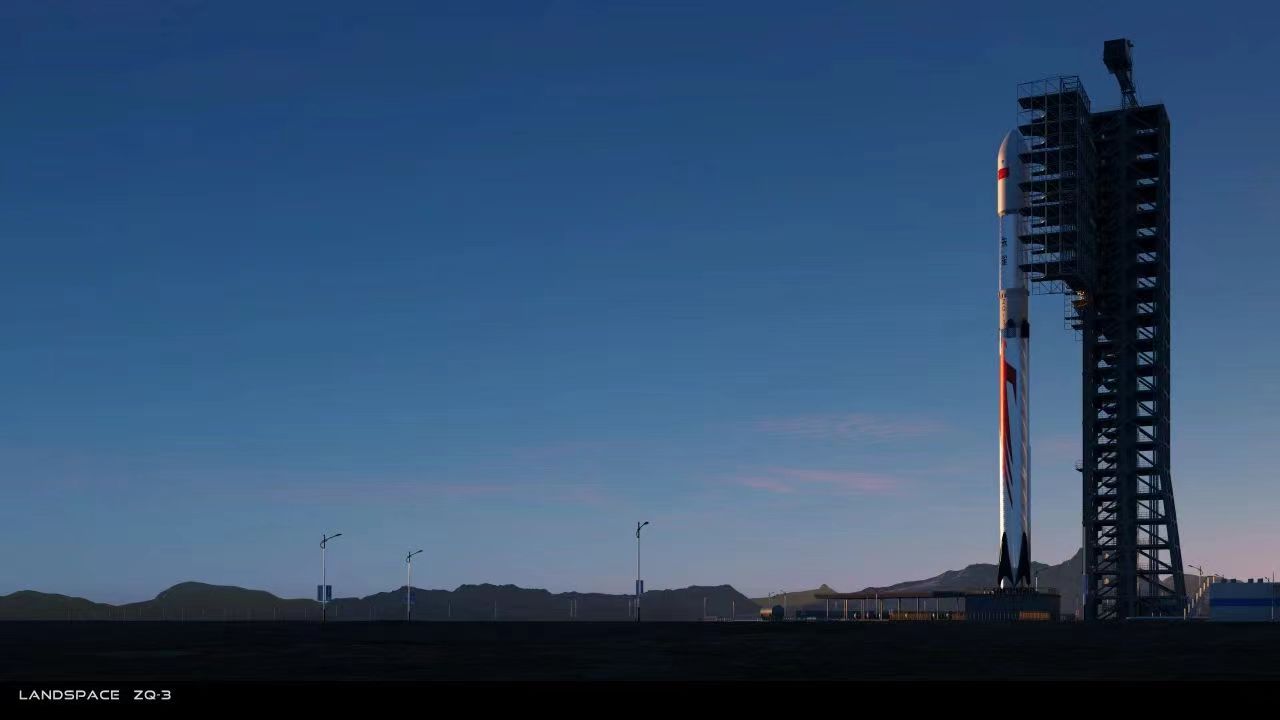
Vertical Space
Over the course of a year, the project will organize three small-scale salons in Beijing, Shanghai, and London, focusing on research topics. These salons will invite researchers involved in space transportation vehicle systems, space manufacturing technology, space science applications, and space telescopes, to engage in dialogue and discussion with practitioners long dedicated to the dialogue between technology and creativity. The discussions will be shared with interested audiences in the form of videos, podcasts, and other media.
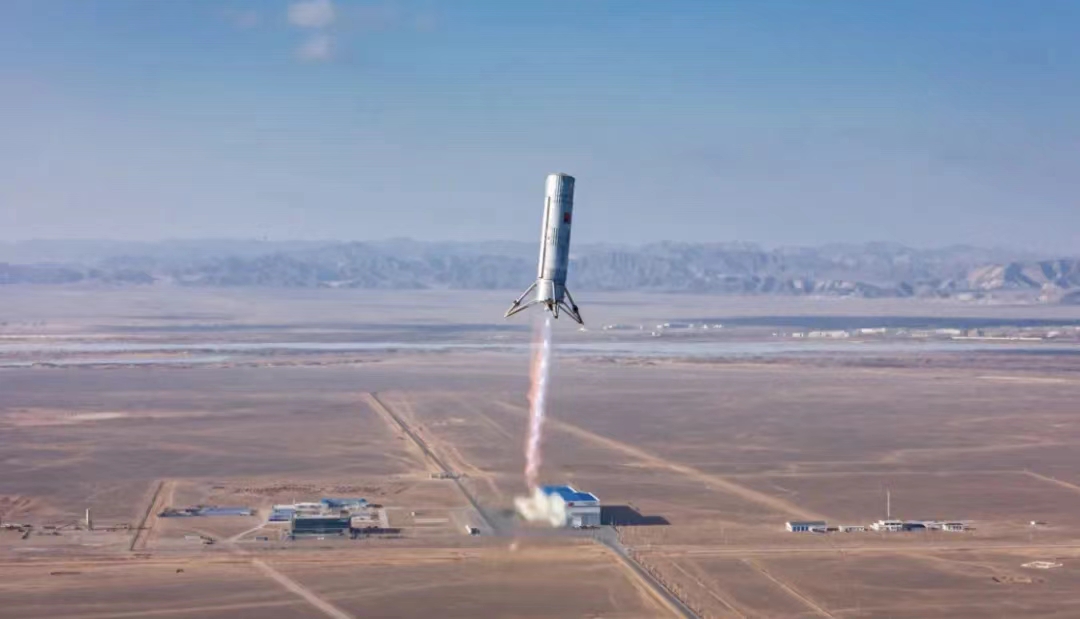
The Falling Rocket Debris and a Sustainable Future
Liquid oxygen and methane propellant is considered a safer and more environmentally friendly fuel. The carbon buildup from its combustion is easier to manage, potentially significantly reducing the maintenance costs of reusable rockets. This provides a technical foundation for the sustainable development of future space transportation.
In the summer of 2024, the project will move to Zhongwei City in the Ningxia Hui Autonomous Region. The activities will include visits, hikes, and searches around the rocket launch center and rocket impact points, bringing artists to the forefront of the aerospace industry. They will gain a comprehensive understanding of the technological chain and contemplate the sustainable future of reusable technology and the orbital and space economy.
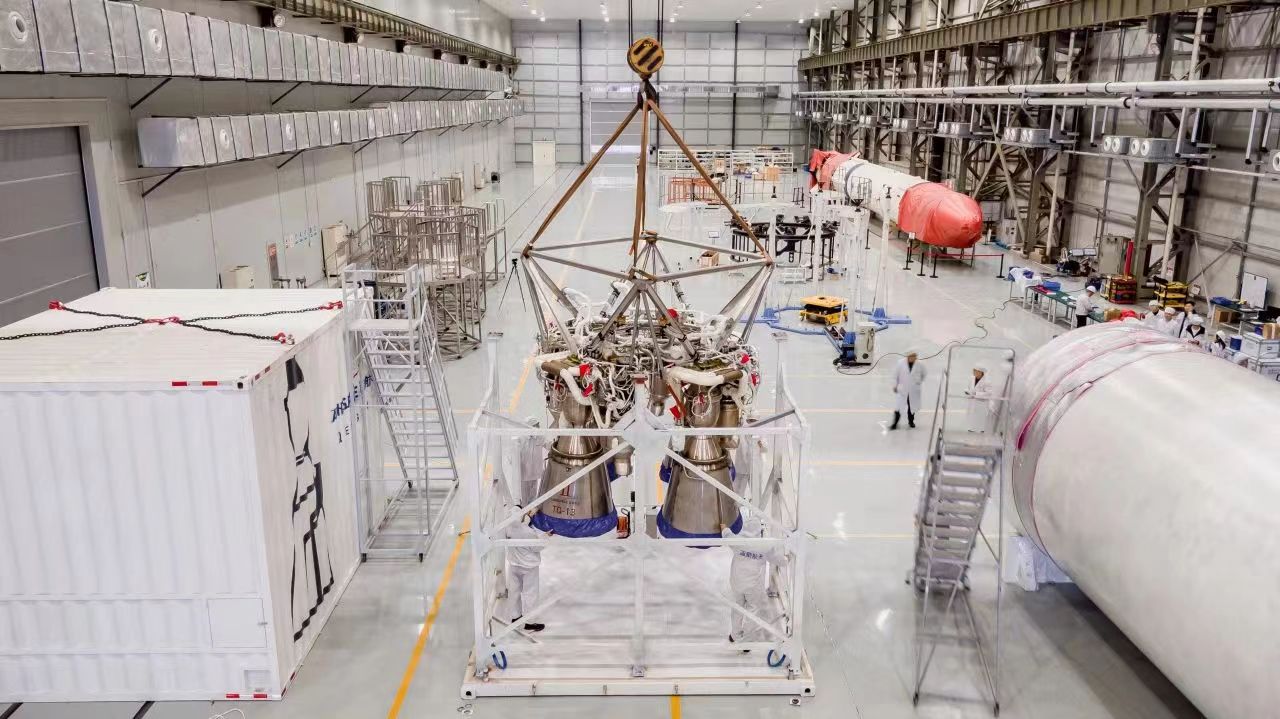
Open Call
As part of this long-term project, we also invite scientists, artists, designers, architects, and science fiction writers to participate. The project will provide technical education related to spaceflight, onsite visits to the aerospace industrial chain, and guest lectures from researchers in the humanities and social sciences. This open call project particularly focuses on the dialogue between the abstract, sensually lacking concept of "space" and the tangible reality of the ground-level aerospace industrial chain. It aims to invite creators from accessible aspects—whether material, environmental, or sensory.
Organisers
LandSpace is the developer and launcher of the world's first liquid oxygen methane carrier rocket to achieve continuous successful orbital launches. Established in 2015, it is a leading enterprise in the creation and operation of space transportation systems in China. The company is dedicated to building a full industrial chain centered around medium and large liquid oxygen methane carrier rockets, encompassing "research and development, manufacturing, testing, and launching." LandSpace aims to create a comprehensive technology complex in the aerospace field, providing high-cost-performance and highly reliable space transportation services to the global market.
CITATION
space cosmos infrastructureOther texts
Author:Iris Long